Understanding the Technique
Why the concentration ratio changes everything
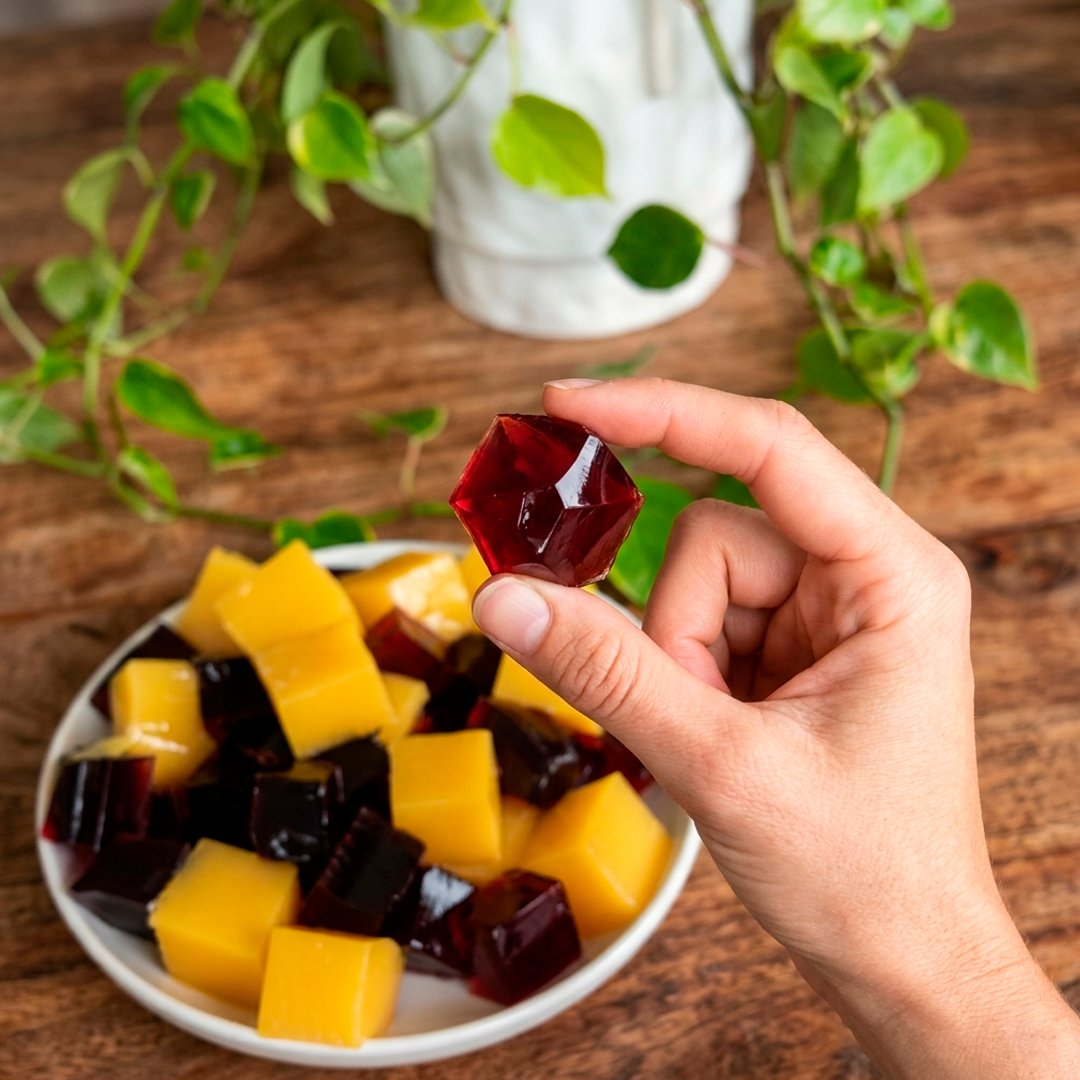
The thing that makes these cubes look so visually distinctive is gelatin concentration. The relationship between grams of gelatin and volume of liquid determines whether the set cube is soft and yielding, firmly holdable, or near-crystalline. For the hand-holdable gem effect in this recipe, you are aiming for the firmer end of the range.
Both colours follow the same process, run in parallel. While the crimson layer is setting in its tray, the golden layer is setting in its tray. When both are firm enough to cut cleanly, you cube them and combine them on the serving plate. The two-colour effect is achieved entirely through parallel preparation — there is no complex technique for combining them.
| Gelatin ratio | Texture result | Ideal for |
|---|
| 7–9g per 500ml | Soft, wobbly, bowl-served | Dessert spoons |
| 10–12g per 500ml | Firm, holdable, cuts cleanly | Crystal cube effect |
| 13–15g per 500ml | Very firm, almost rigid | Decorative arrangements |
"I've made these three weekends in a row with different flavour combinations. The grape and mango combination shown here is the most impressive-looking — but the strawberry and lychee version tastes even better."
— READER · JELLY STUDIO COMMUNITY
Practical Notes
One critical detail most recipes leave out
Cut the cubes while the jelly is still cold from the refrigerator. As gelatin warms toward room temperature it becomes more pliable and cuts less cleanly — the edges begin to round and the crystalline corners are lost. Keep everything refrigerated right up until the moment you are ready to cut, plate, and serve.
The serving plate also benefits from being chilled. A room-temperature plate will begin to warm the cubes from the base, which softens the bottoms and can cause them to flatten slightly. This is a small detail but it makes a visible difference in the final presentation.
Recipe Access
Get the Complete Crystal Jelly Method
Exact concentration ratios, parallel batch timing, the cutting technique that produces the sharpest edges, and the full colour pairing guide.
Access Full Recipe →